On this page
Burgundy and gray work together because you can make the contrast as quiet or as pronounced as you like. Start with one main garment in each color, compare them in daylight, then choose shoes that repeat the darker note or deliberately lighten the outfit. There is no need to find a perfectly matching burgundy bag, shoe and lip color.
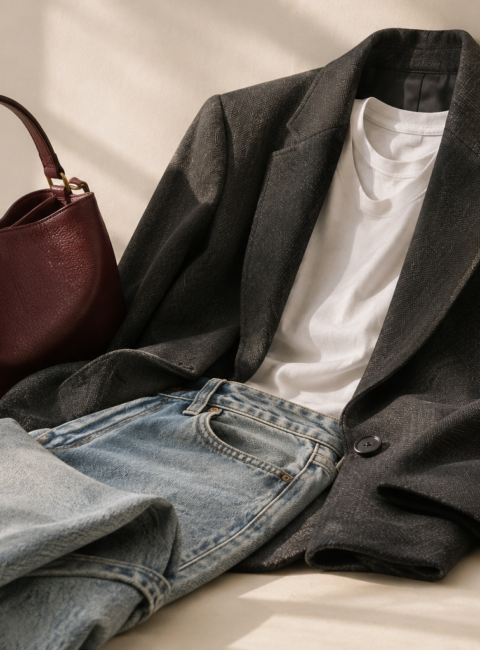
I’m drawn to this pairing when black feels a little severe but beige is not the mood. The interesting part is the range inside each color: pale gray flannel beside wine-colored knitwear looks quite different from charcoal denim with a bright cherry-burgundy bag.
Put the actual shades beside each other
Color names on shopping pages are not very precise. Burgundy might describe a purple-red, a brownish oxblood or a clearer dark red. Gray can lean blue, brown or somewhere between. Before deciding the combination does not work, check whether the two pieces are being judged under the same light.
Lay them next to each other near a window. If a burgundy top makes a warm gray trouser look muddier than you like, try a paler or cooler gray. If the contrast feels stark, a softer knit or a darker gray may make it calmer. These are visual preferences, not color-analysis diagnoses.
Take one photo with both garments in the frame. A phone can change color automatically, so use it to compare the outline and relative lightness rather than treating the photo as a perfect color reference.
Choose which color occupies the larger area
For a restrained version, I’d use gray trousers and a gray coat with a burgundy scarf or bag. That makes the red an accent. For a more expressive version, a burgundy sweater or skirt gives the color enough space to become the point of the outfit.
If both main pieces are dark, reveal a small lighter area at the neckline or wrist. A cream shirt collar can help separate the garments without introducing another strong color. If you prefer an uninterrupted dark palette, change the surfaces instead: a brushed knit, a smoother trouser and leather shoes will read differently even at similar depths.
Try these three outfit structures
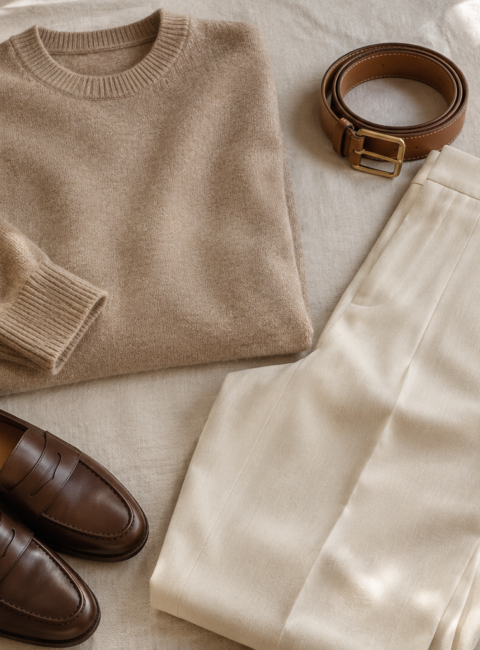
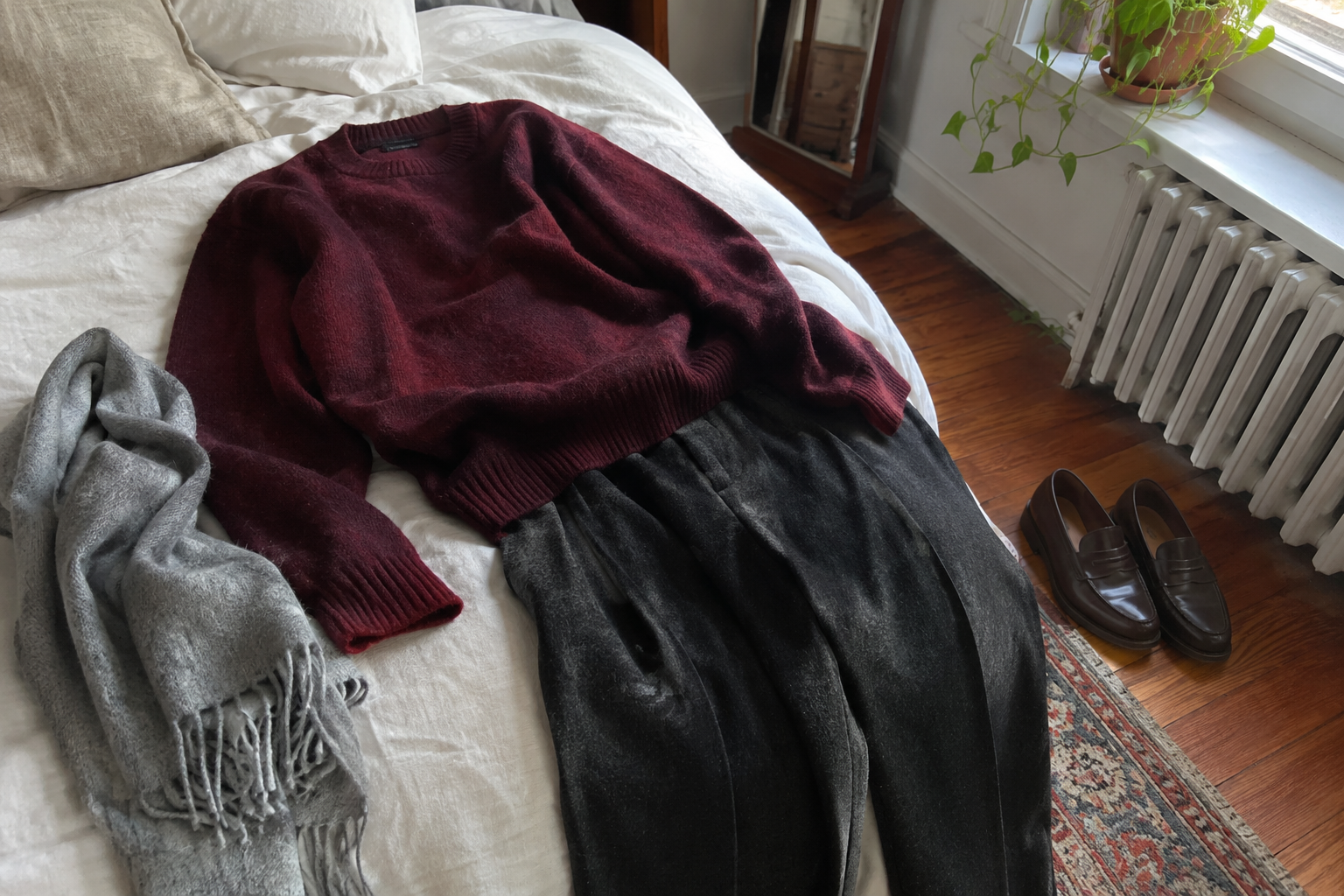
Gray trousers, burgundy knit, dark loafers. Begin with the trouser length in the shoes you intend to wear. Let a fine knit sit partly tucked or untucked according to the waistband. A thick front tuck can create a lump under a fitted coat, so check the side view.
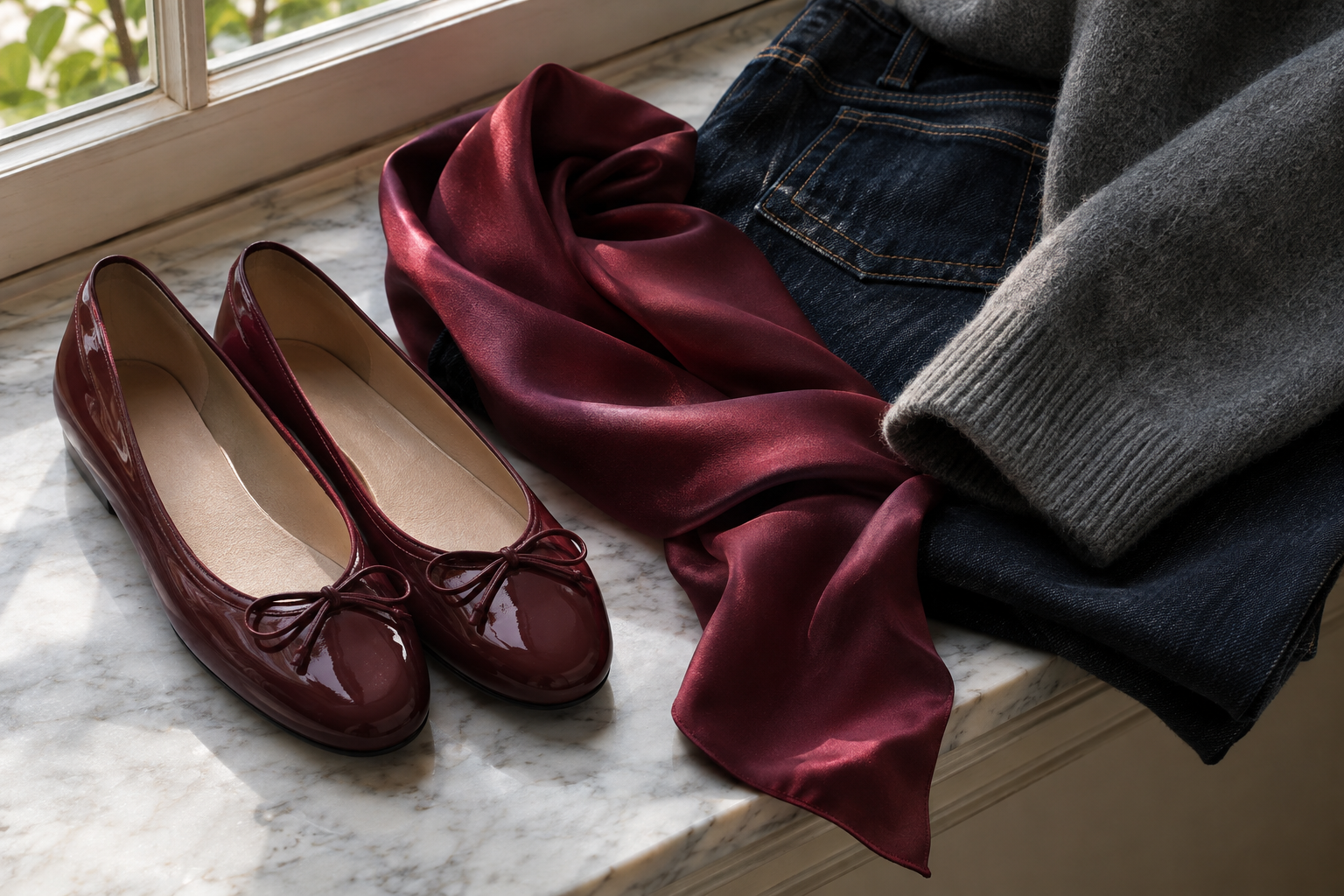
Gray jeans, cream shirt, burgundy bag. This is an accessible way to use an accent you already own. Keep the shirt collar and cuffs comfortable rather than exposing them just for effect. A small repeat of burgundy elsewhere is optional, not an assignment.
Burgundy skirt, gray sweater, boots. Compare the bulk of the sweater with the movement of the skirt. If both are substantial, try a finer knit before assuming the colors are wrong. A straighter skirt and a more relaxed sweater can also work if the waist and hips have room.
For a wider set of small color additions, the burgundy accessories guide is the related starting point.
Let the shoes solve a practical question
Black shoes offer a clear, dark ending. Brown leather can make the palette warmer, though the particular brown matters. White sneakers create a much lighter interruption, which may feel right for a casual day and distracting for a softer, dressier outline.
Rather than asking which shoe color is correct, ask where you want the contrast. If the bag is the only bright detail, a quiet shoe keeps attention there. If the outfit is nearly tonal, a lighter shoe can become the deliberate break. Then check weather, walking and trouser clearance. A beautiful pairing that drags along the pavement is not finished.
Common reasons the combination feels unsettled
Too many almost-matching reds can be harder to arrange than two clearly different shades. Remove one accessory and see whether the outfit becomes clearer. There is no need to solve the mismatch by buying a fourth red item.
Gray that looks flat indoors may need texture rather than shine. Try ribbing, flannel or a visible weave. If the whole outfit feels heavy, change one garment’s lightness before adding jewelry and a scarf. The cream, camel and chocolate notes show a similar approach to separating related tones.
My final check would be very ordinary: put on the coat, pick up the bag and look at the whole outfit once. Keep the variation that feels clear and wearable. The charm of burgundy and gray is the room it leaves for those small decisions.