On this page
A cardigan over a dress works best when the two pieces have enough room to move separately. Before changing the whole outfit, check three things: where the knit ends, whether its buttons pull, and what happens to the dress when you sit down. Those little checks tell you more than a rule about the perfect cardigan length.
I love the softness of this pairing, especially when a dress feels a touch too dressed up on its own. A knit can make it easier to wear for lunch or an ordinary afternoon. The trick is choosing the adjustment that solves your actual problem, rather than adding a belt and hoping for the best.
Start with the shape of the dress
Lay the cardigan beside the dress before putting either on. A fitted bodice and gathered skirt already have a clear change of shape at the waist. A short cardigan can echo that point. A straight slip dress has a quieter outline, so a longer, open cardigan can work without hiding a waist detail you wanted to show.
A shirt dress brings another complication: buttons, a collar and sometimes a belt. With that much structure underneath, I’d begin with a plain knit worn open. Two button plackets, a chunky neckline and a tie belt can all sit on top of each other. If the middle feels crowded, remove one element before buying another cardigan.
For a dress with puff sleeves, check the cardigan’s upper arms. A slim knit that fits beautifully over a camisole may compress those sleeves. Sizing up can help, but a roomier sleeve shape is sometimes the better answer.
Compare two lengths in the mirror
Try the cardigan as it is, then gently fold its hem under to preview a shorter length. This is a fitting experiment, not a suggestion to spend the day holding a fold in place. Take a front and side view with your phone if the difference is hard to judge in the mirror.
- A waist-length hem can leave a full skirt visible and keep the outfit feeling light.
- A hip-length cardigan gives more coverage, but check whether its hem lands exactly where the skirt becomes fullest.
- A long cardigan can follow the line of a straighter dress. Look at how much dress appears below it and whether the two fabrics move comfortably together.
There is no required gap between hems. If a small difference looks accidental to you, try a more noticeable length contrast. If you enjoy a close, layered line, keep it. The useful question is whether the outline looks deliberate from more than one angle.

Decide how much of the cardigan to fasten
Fastening one or two middle buttons can suggest a waist without closing the whole front. It only works if the knit rests there without stretching. If the spaces between buttons open into little diamonds, release them. A visible strain line is information about fit, not something you need to conceal.
With a fitted dress, an open cardigan may be all the definition you want. With a looser dress, compare the open version with one central button fastened. A belt is another option, but place it over a smooth section of fabric. Thick cardigan pockets and a belt usually compete for the same space.
Three combinations worth trying with pieces you own
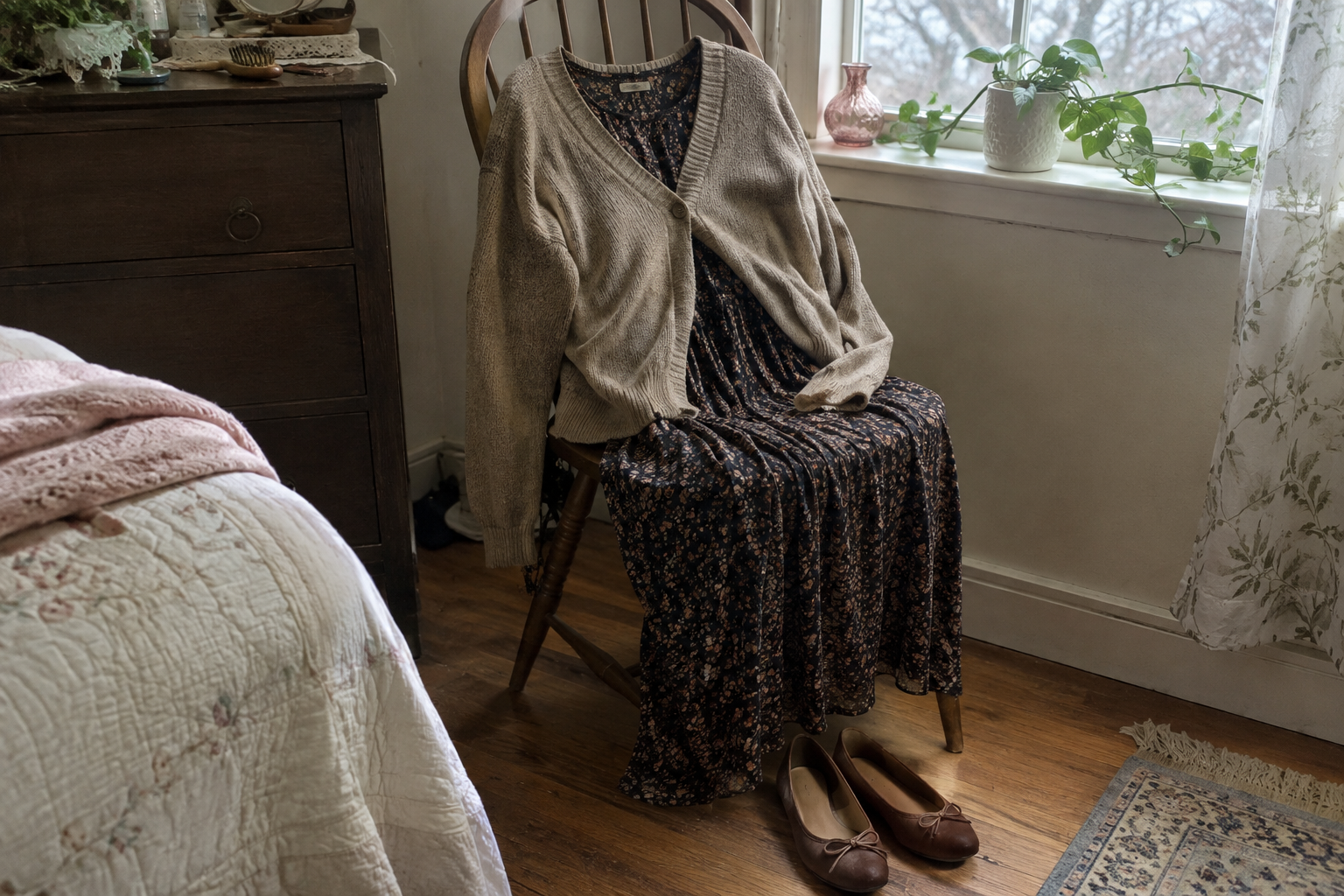
For a floral midi dress, I’d start with a fine, waist-length knit and low boots. Let one color in the print guide the cardigan rather than matching every shade. If the print is already busy, a plain shoe gives the eye somewhere to rest.
For a slip dress, a relaxed cardigan and loafers can soften the shine. Check the cardigan’s inside seams against the dress fabric. A rough seam or hook can catch a delicate surface. Don’t drag the knit across the dress when taking it off.
For a cotton shirt dress, an open cardigan and simple sneakers make an easy daytime version. If the dress belt creates a lump under the knit, try removing it, provided the dress still fits and closes comfortably. This is the same kind of clean-line adjustment I discuss in the cardigan and straight-leg jeans outfit.
Fix the part that keeps bothering you
If the dress rides upward, separate the layers and check whether the knit grips the fabric. A smoother cardigan or an appropriate slip may help more than repeatedly tugging the hem. Check the dress care label before trying any static treatment.
If the neckline feels heavy, remove a scarf or long necklace before changing the cardigan. If the outfit feels shapeless, reveal more of the dress through an open front or try a shorter knit. If it feels bulky only under a coat, the problem may be the coat’s sleeve room rather than the cardigan itself.
Before leaving, sit, lift your arms and put on the coat you actually need. I would rather discover a tight shoulder at home than spend lunch negotiating with it. For a different take on mixing soft knitwear and fluid fabric, the daytime satin skirt guide offers a useful comparison.