On this page
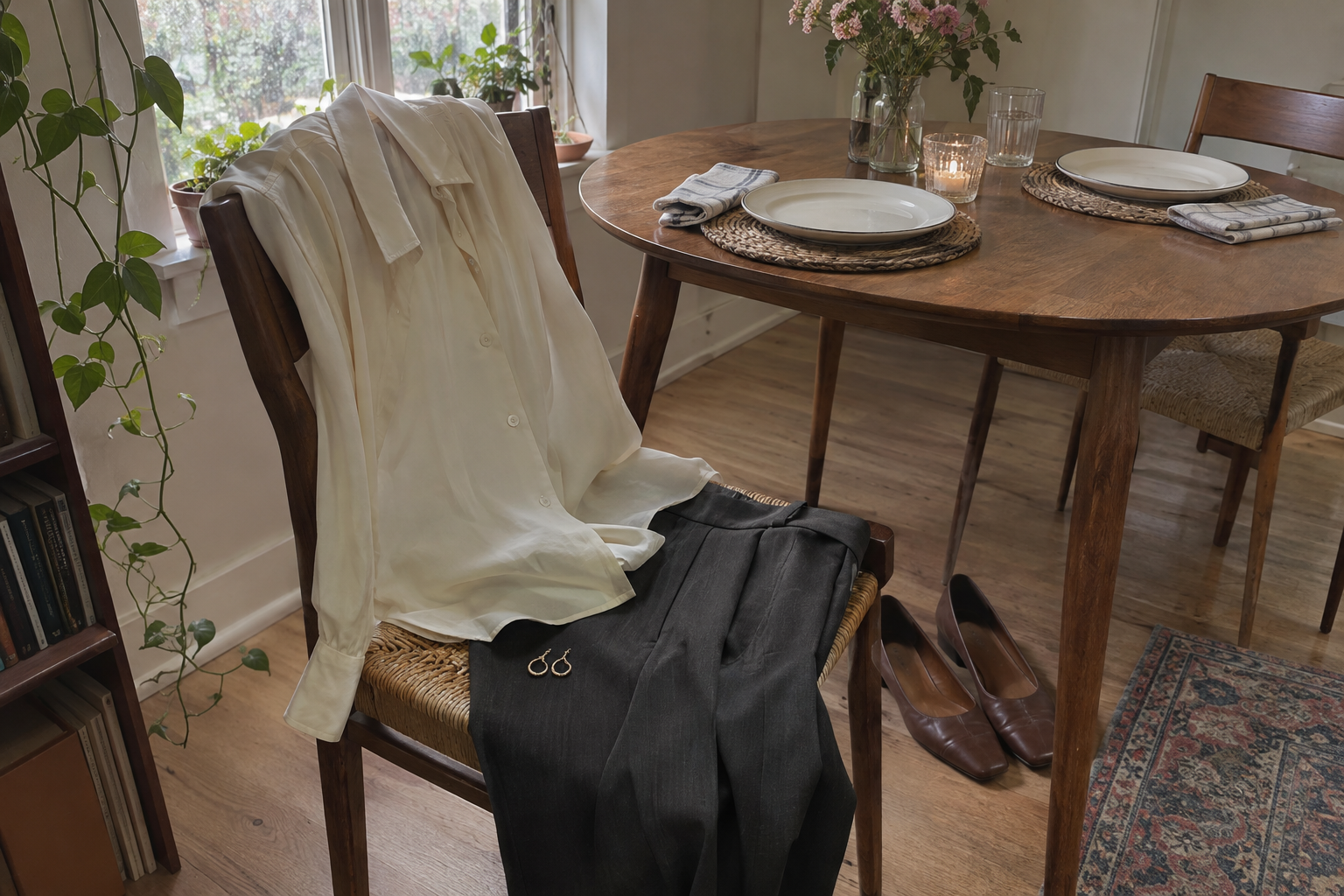
For a dinner party, start with the invitation and the setting, then build an outfit that works while seated. A knit with tailored trousers, a simple dress with a soft layer, or a skirt with a tidy top can all fit. The useful details are the waistband, sleeves, shoes and the temperature indoors.
I love a little occasion dressing, even around somebody’s kitchen table. But a beautiful sleeve that keeps landing in a serving dish is not doing much for the evening. I’d rather choose one lovely detail and make sure the rest of the outfit lets you relax.
Read the setting before choosing the sparkle
A casual supper at a friend’s home is different from a milestone dinner with a stated dress code. Look for clues in the invitation: start time, venue, how formal the host usually makes the occasion and whether you’ll be outside at any point. If the wording is unclear, asking the host is more useful than guessing from the word dinner alone.
If there is a dress code, use it as the starting point. These suggestions are for relaxed or smart-casual home dinners, not a substitute for black tie or other specific requirements. You can still feel dressed up without adding a heel or a new outfit you will never wear again.
Consider the journey as well. A short walk, public transport and a car ride place different demands on shoes and outerwear. An outfit planned only for the chair at the table may leave you cold on the way there.
Do the seated test with the real outfit
Sit in an ordinary chair, with the trousers or skirt fastened where you will wear them. Notice whether the waistband presses, the dress pulls at the hips or the top opens between buttons. Lean forward slightly and reach for an imaginary glass. It is a better test than standing very still in a flattering mirror pose.
If a waistband is uncomfortable before dinner, adjust the outfit now. A different rise, a roomier cut or another garment may be the answer. Concealing the problem beneath a longer top changes what you see, not what you feel.
For a short skirt or a dress with a slit, check the seated length. You may be happy with it, or you may prefer another option. The point is knowing before you arrive, without any rule about what a particular age or body should wear.
Three outfits, with reasons to choose each
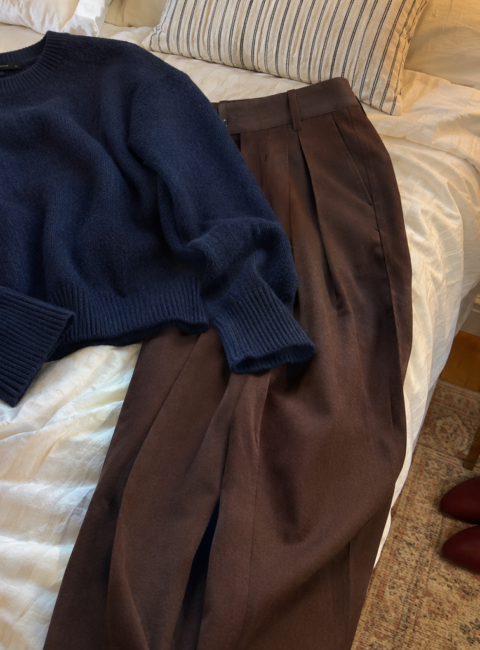
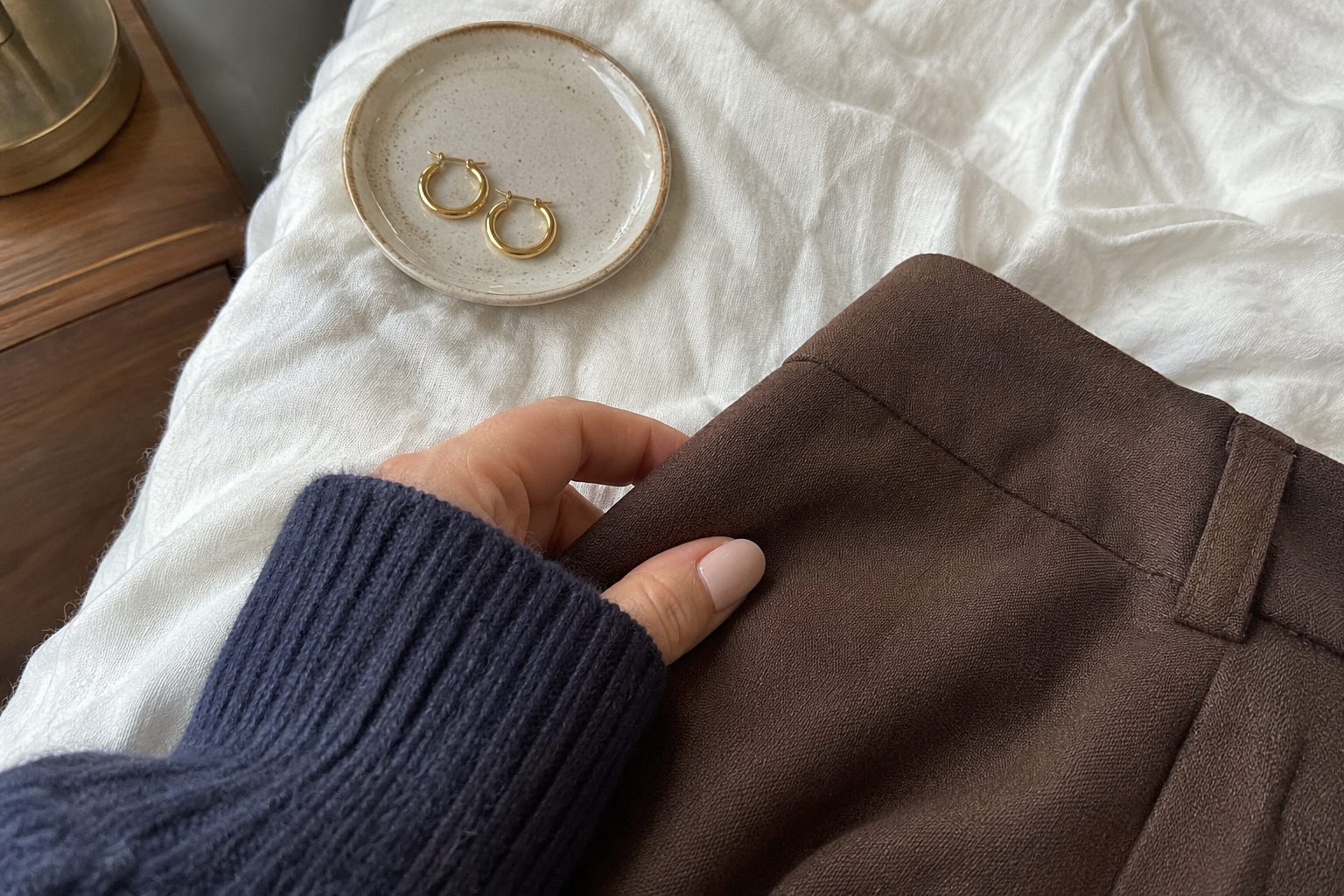
Fine knit and tailored trousers: a useful option if you want warmth and a little structure. I’d keep the knit thin enough to sit neatly at the waistband, then add an earring or a small pendant. The navy sweater dinner outfit is one version of this idea.
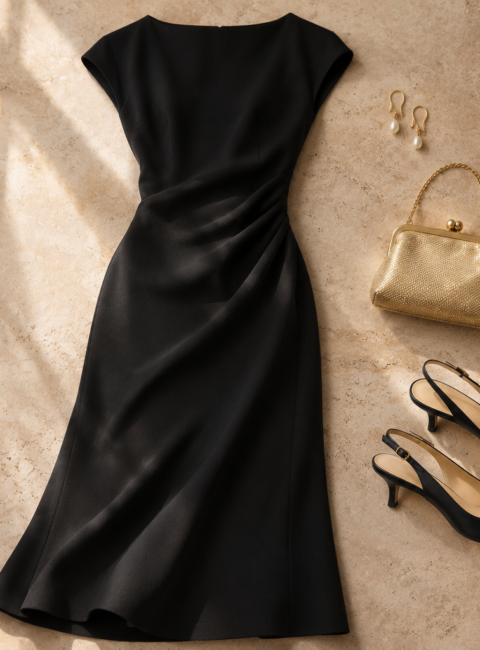
A simple dress and a cardigan: helpful if the room temperature is uncertain. Choose a layer you can remove without upsetting the whole neckline or pulling at delicate fabric. Try the dress both with and without the cardigan, so either version feels complete.
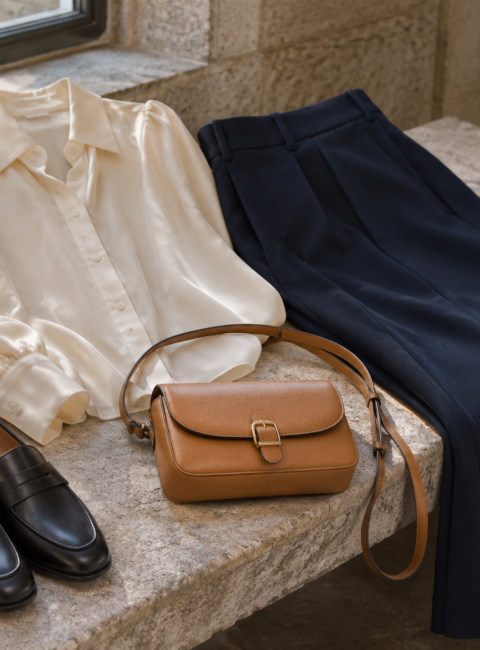
A fluid skirt and a plain top: lovely when you want texture to provide the interest. A soft skirt beside a smoother knit can feel dressed up without much jewelry. Check how the skirt moves under the table and whether a long pendant will knock against plates when you lean forward.
Sleeves and jewelry deserve a practical look
Wide cuffs and long ties can reach farther than you expect. Fold a cuff only if it stays comfortably in place, or choose a sleeve that already clears your hands. A beautiful blouse need not be banished from dinner, but it helps to know where its fabric will go when you’re passing a bowl.
Bracelets that slide noisily along your arm may be less enjoyable at a close table. A watch, a smaller bracelet or earrings can give the same finished feeling with less movement. If you enjoy mixed metals, the gold and silver jewelry guide offers ways to keep the grouping clear.
Think about the shoes-off version
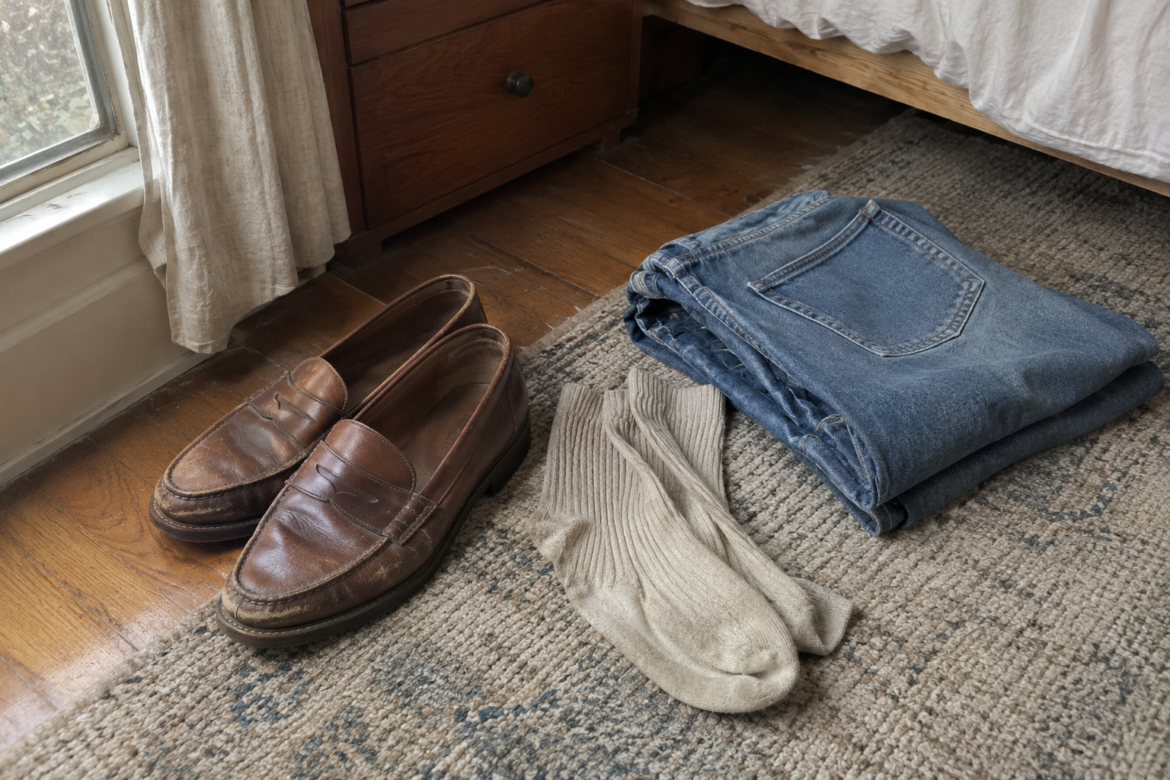
Some hosts prefer shoes off indoors. If you know that is likely, choose socks or hosiery you feel comfortable wearing and avoid making the whole outfit depend on heel height. Trousers hemmed for high shoes may drag once the shoes come off. A hem suited to flats gives you more flexibility.
If you are not sure about house preferences, it is fine to ask. Bringing a separate indoor shoe only makes sense if the host is comfortable with it. The aim is to fit the evening, not arrive with your own flooring policy.
Before leaving, take off the coat and look at the outfit you will actually spend the evening in. Can you sit, move your arms and eat without adjusting something every few minutes? If so, the small sparkly detail can simply be enjoyable. That is my favorite kind of dressed up.