On this page
When an outfit catches my eye in a photograph, the label is rarely the first part I want to know about. I notice how a sleeve falls, where the trousers meet the shoe and whether one texture gives another a little space. Those are the details I can enjoy without turning the whole look into a shopping list.
Celebrity dressing can be entertaining to look at, but an image usually leaves out the fittings, styling help and practical compromises around it. I would rather borrow a small idea than imagine that the entire outfit needs to move into an ordinary Tuesday.
Look at the shape before the individual pieces
A loose shirt over a neater trouser can feel balanced without either item being expensive or unusual. I like noticing where the volume sits: at the shoulder, through the leg or around the hem. That is a more useful starting point than trying to identify every brand.
If a shape appeals, look for something with a similar relationship in your own clothes. The exact fabric or color can change. A familiar shirt with a little room may give you the same easy feeling as a reference image, even when none of the items match.
Notice the quiet work of a cuff
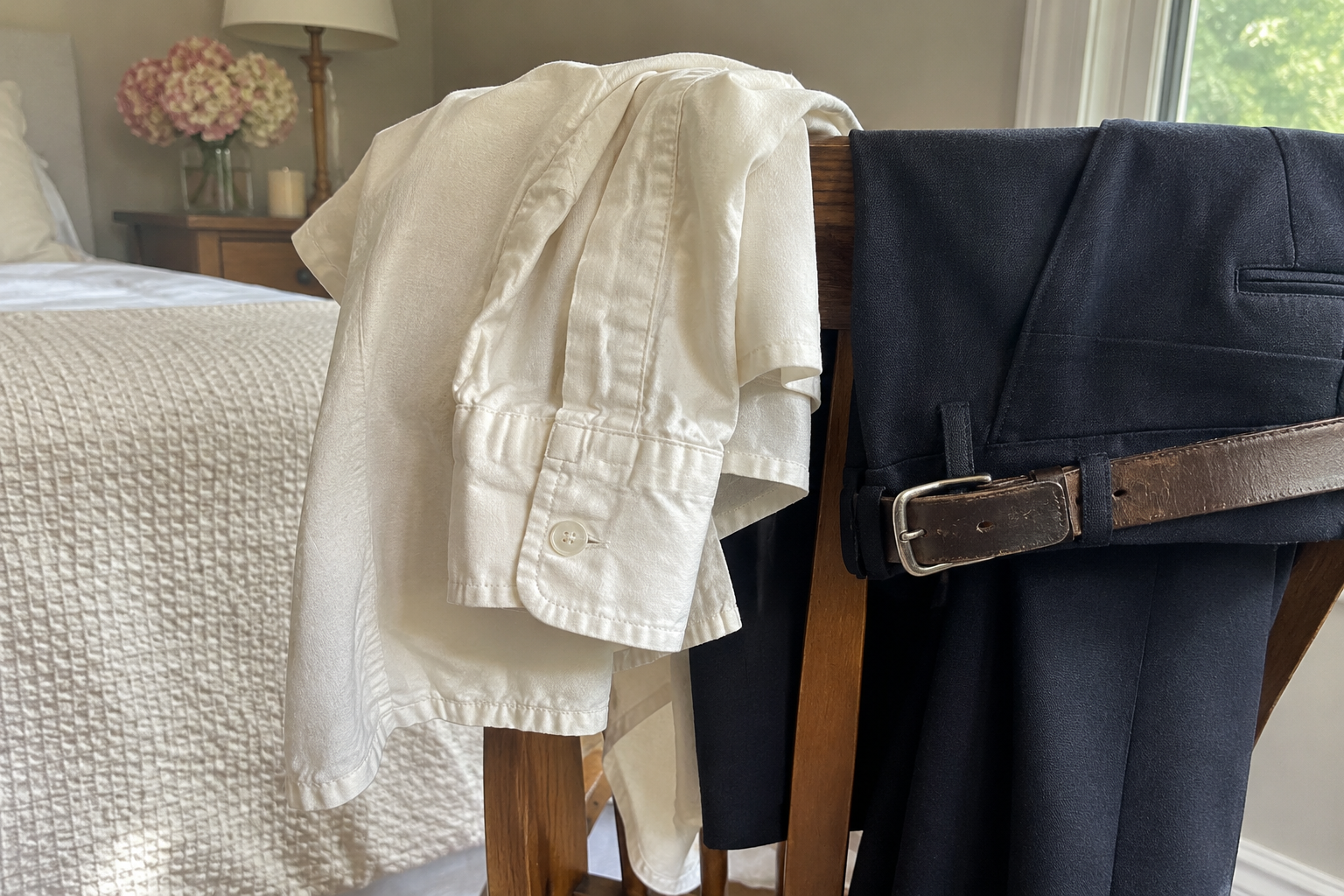
Sleeves affect an outfit more than their small area suggests. A turned cuff can show the wrist, interrupt a block of color or make a structured shirt feel less formal. I would try a small fold first rather than immediately pushing everything to the elbow.
The little adjustments in my note on enjoying clothes you already own belong here too. Sometimes a piece has not become boring at all. It has simply been worn in one arrangement so often that another possibility is easy to overlook.
Let texture bring the interest
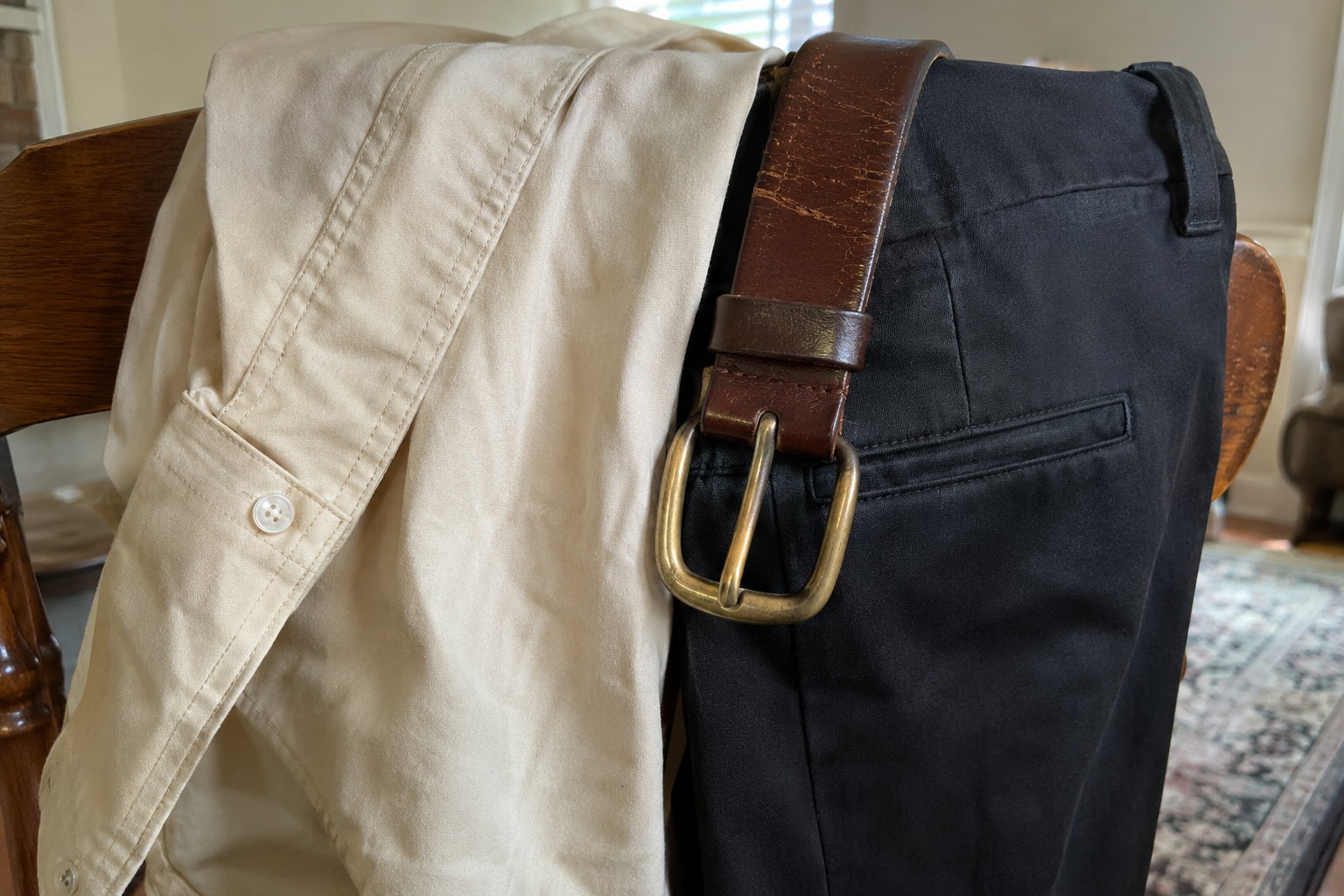
An ivory cotton shirt beside a soft wool trouser has contrast even if both colors are quiet. I like seeing a little weave, a normal crease or the worn surface of a leather belt. Those details can make an outfit feel more personal than a collection of perfectly new items.
A photograph can exaggerate sheen or soften texture, so I would not expect the same effect under every light. Try the idea in the room where you actually get dressed. The clothes still need to feel good when the camera is put away.
Borrow the feeling and leave the rest
Perhaps the useful part of a reference is simply dark colors with one pale piece, or a soft knit beside a sharper trouser. My navy-sweater dinner outfit is a small version of that thought, with comfort still in the picture.
I love beautiful clothes, but I do not want every lovely photograph to become an assignment. A cuff, a color relationship or the way a belt breaks up a shirt can be enough to take away. The label can remain a detail you never need to find out.